
I am a sucker for a cross generational friendship. As such there’s something that really appealed to me about the premise of Akin. An eighty-year-old retired chemistry professor, days away from his first return to Nice since childhood, is handed his eleven-year-old great-nephew he’s never met and told to get on with it. It is at its best as a story about a reluctant cross generational connection. As a mystery with a wartime sub plot, it is less satisfying.
Plot in a Nutshell
Noah Selvaggio is a retired chemistry professor and widower living on the Upper West Side, but born in the South of France. He is days away from his first visit back to Nice since he was a child, bringing with him a handful of puzzling photos he’s discovered from his mother’s wartime years. But he receives a call from social services: Noah is the closest available relative of an eleven-year-old great-nephew he’s never met, who urgently needs someone to look after him. Out of a feeling of obligation, Noah agrees to take Michael along on his trip.
Much has changed in this famously charming seaside mecca for the rich, famous and hangers on. In Noah’s eyes it is still haunted by memories of the Nazi occupation. The unlikely duo, suffering from jet lag and culture shock, bicker about everything from steak frites to screen time. But Noah gradually comes to appreciate the boy’s wit, and Michael’s ease with tech and sharp eye help Noah unearth troubling details about their family’s past. Both come to grasp the risks people in all eras have run for their loved ones, and find they are more akin than they knew.
Thoughts
This is confident and well written, I was totally absorbed by the story and the writing but think possibly not as strong as some of her other novels I have read.
What Donoghue does very well is character. Akin works so much better as a character-led novel than as a plot-driven one, and its central relationship has a prickly credibility and sense of heart that keeps the book engaging even when the mystery feels thin.
Noah is a carefully drawn. An old man: curmudgeonly, particular and set in his ways he is used to a life that has become smaller and more and more predictable. Donoghue does not over-soften him. He can be annoying and unpleasant. He jumps to conclusions, often too quickly, and his assumptions about Michael are not always empathetic or kind. But he also has enough self-awareness to recognise when he is getting things wrong. The most endearing parts of the novel come from watching him try, awkwardly but sincerely, to build and then course-correct a relationship he never expected.
Michael is street smart and sharp but also heartbreakingly vulnerable. The start of his life has been unconventional and challenging and is shown to us in lots of thoughtful ways but he never becomes a stereotype. He is not just a rough kid with a drug addict father and an imprisoned mother. He is not just a vulnerable child dropped into Noah’s life to teach him a lesson. He has a history, loyalties, griefs and instincts of his own.
One of the things I really liked was the fact that Noah’s grandfather a photographer. Noah’s efforts to explain photography to Michael, also give their relationship a layer it wouldn’t otherwise have. Michael’s constant phone-snapping and selfie-taking, which could have read as pure generational stereotype, is reframed by the connection. There’s a hint that he has a good eye, and that loose family thread turns out to be one of the novel’s nicer touches.
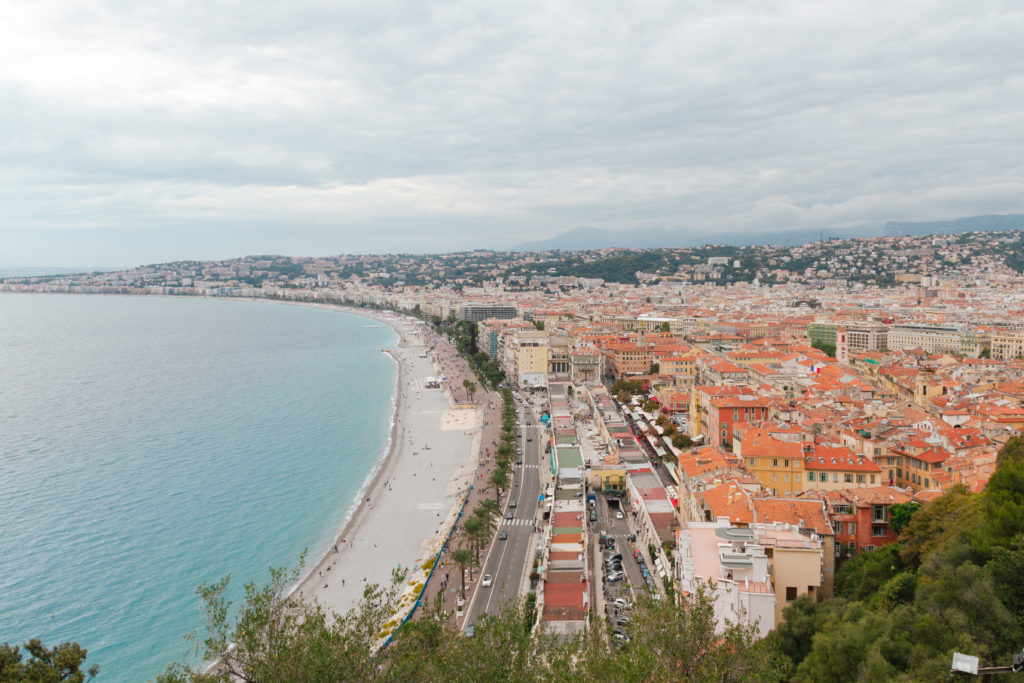
I also really enjoyed the setting choices. New York scenes are used to great effect to show Noah as a somewhat set in his ways old man comfortable in his apartment and his life. Being taken to visit Michael’s mother pushes him into a more unfamiliar world. Nice is both familiar and deeply foreign as we explore it through Noah’s returning and Michael’s new to travel eyes. And Nice becomes a door through which Noah explores his own and his families past.
Plot wise the novel struggles a little. There is a clear set up that brings this odd couple together, although how realistic asking a man in his eighties to solo parent a pre teen is, I don’t know but it all felt believable. What I struggled with more was the central mystery. Resistance and collaboration during occupation felt like they could have been super interesting and I was intrigued by the idea. It was let down by the photograph angle. Trying to connect by interpreting a handful of photos meant we would never go deep. His lack of forethought and planning in conjunction with his insistence on jumping to conclusions also felt deeply frustrating.
Enjoyable but ultimately a little uneven.