Part science, part architecture, yet ultimately a quiet love letter to creativity. An insight into dreaming so ambitiously that new methods must be invented to make the dream real.
Context in a Nutshell
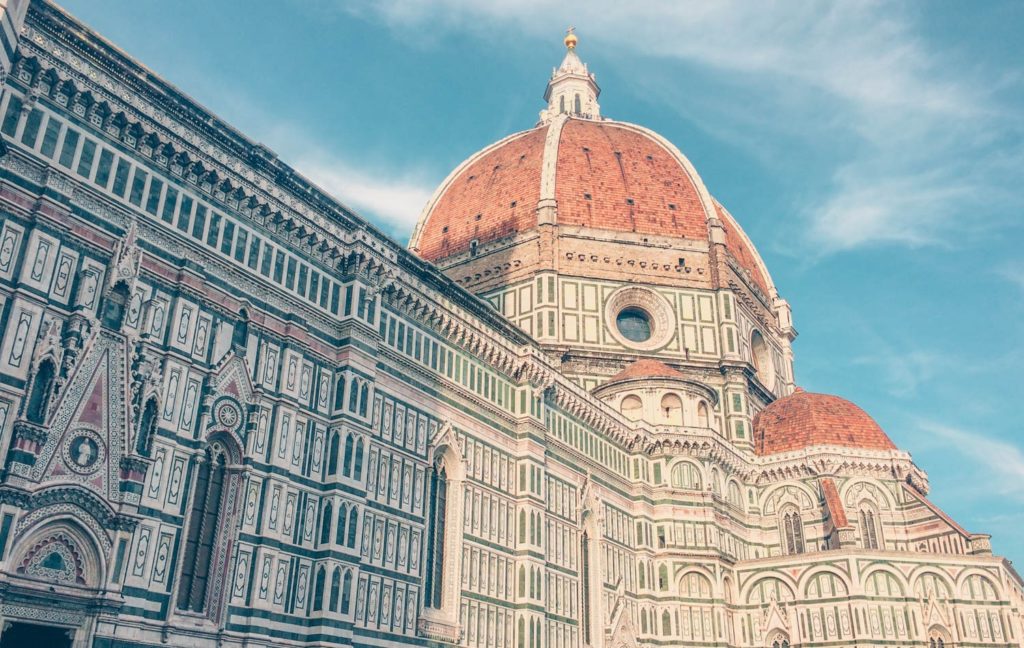
Brunelleschi’s Dome tells the story of Filippo Brunelleschi and his audacious solution to one of medieval Europe’s most daunting architectural problems: how to construct the vast dome of Florence’s cathedral when no one knew how it could be done.
The cathedral had been designed in the late thirteenth century with an enormous octagonal space intended for a cupola, yet no workable method existed to build it. For decades, even as the rest of the structure rose stone by stone, the question remained unresolved. Brunelleschi’s eventual design not only solved the structural puzzle but required him to invent entirely new machinery and building techniques to execute it, hundreds of feet above the city streets.
Thoughts
Physics was absolutely my weakest link at school, and this book contains a good deal of physics disguised as mathematics and engineering. The challenges King outlines are threefold: to conceive the dome itself, to calculate how it might stand, and then to work out how to build it so high above the ground.
It is a credit to King’s writing that I found myself fascinated by descriptions of cranes, levers and hoisting mechanisms. Each invention solves a specific obstacle, and that drove a steady narrative momentum. Even the more technical sections feel purposeful and at no point did it feel dry or dull.
This is not, however, simply a story of architectural prowess. King evokes pre-Renaissance Italy, and Florence in particular, with vivid detail. The city’s sounds and smells are present, as is its distinctive political structure. The intrigue, infighting and personal jealousies that shaped civic life become central to the project’s progress. The cathedral’s completion was as much a political feat as an engineering one.
There is, inevitably, a trade-off. Florence is rendered in rich texture, but I would have welcomed more insight into Brunelleschi himself. We see his drive and his legacy clearly; he himself remains more elusive. There is also slightly more technical detail than I personally needed, though others will relish it.
Still, there is more than enough here to recommend. For anyone interested in architecture, the beginnings of the Renaissance, or planning a trip to Florence. A compelling and ultimately quietly moving account of what it takes to achieve the seemingly impossible,. An ode to the creativity, determination and sheer persistence required to turn vision into a reality so powerful it stands hundreds of years later.