This is a beautiful, searching memoir about loss and homeland and the power of your own story. It is not an easy read, but was a worthwhile one. There is something tell about how many quotations I highlighted to include here.
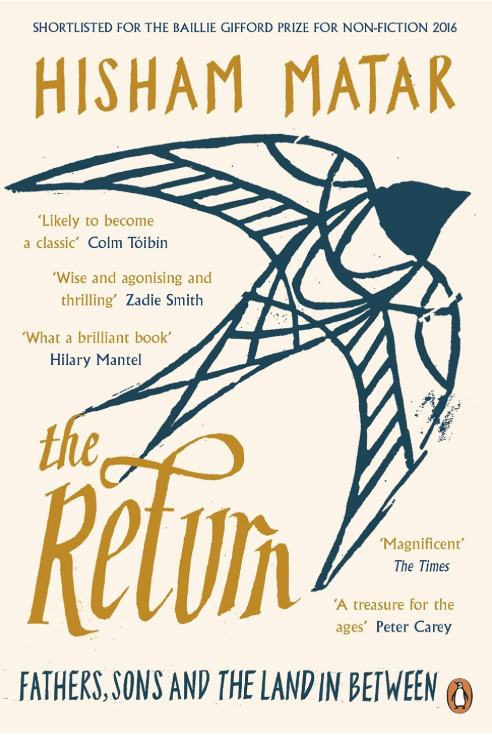
Premise in a Nutshell
Hisham Matar was nineteen when his father, a Libyan dissident, was kidnapped and imprisoned by Gaddafi’s regime. He never saw him again.
Twenty-two years later, after the fall of Gaddafi, Matar is able to return to Libya for the first time since exile. The book follows his attempt to discover what happened to his father, while also reckoning with his country’s violent history, from Italian colonial rule to dictatorship, and with that his own fractured sense of what makes home.
Thoughts
The first thing to say is that the writing is just beautiful. Thoughtful and precise, it is a fitting memorial without falling into being sentimental. Matar is in the midst of the action, yet the book pushes other characters and their stories forward. He does not claim centre stage or position himself as a hero. Rather family members, fellow exiles, imprisoned writers, ordinary Libyans living under terror seem more interesting to him and it’s their stories I really enjoyed.
While the family story sits front and centre, the sadness of Libya’s history is inescapable .Italian colonialism is shown in all its brutality, and the transition from one form of domination to another is compelling even whilst leaving me angry and sad. The historian in me appreciated his reflection on how Libyans encounter their own past through books written by outsiders:
“Libyans hoping to glimpse something of that past must, like an intruder at a private party, enter such books… as though one’s country is but an opportunity for foreigners to exorcize their demons…
This sense of not owning your own history is one that I have seen a few times in more recent reading about the impacts of colonialism but is made incredibly well here. Perhaps because Matar shows it at both a National but also a family level.
For this though The Return never feels only or overtly political. It is about Libya but it is also about a the personal relationship between a father and his son, whilst also being about leaving home and trying to find it again.
There is a powerful sense of family throughout. These connections make the history tangible. I was especially moved by the way Matar honours his mother. The book is not solely about the father as martyr. He writes
“Whereas my father was obsessed with the past and the future, with returning to and remaking Libya, my mother was devoted to the present. For this reason, she was the truly radical force in my adolescence.”
That exploration of parental power is not just Matar and his parents but also his father and his grandfather. Through their relationships we see different kinds of strength, different forms of resistance. Throughout though there is a clear love that sustains and drives the family forward. Even against the backdrop of terrible loss and fear.
As he explores his heritage there are so many reflections on exile and what that means to a person’s identity. He never uses the word “refugee”, I suspect a highly conscious choice and yet the question of what home means when you can’t go back to it remains. A line in particular stayed with me:
“My silent condemnation of those fellow-exiles who wished to assimilate – which is to say, my bloody-minded commitment to rootlessness – was my feeble act of fidelity to the old country…”
Despite having left as a boy, Libya lives vividly within him. His descriptions of his grandfather’s house are detailed and evocative. On his return, the landscape feels recognisable, I could almost smell the sea, see the light.
There is repetition in the book, and it feels deliberate. The authors search for truth not a straight path. Facts and conversations are revisited. Rather than frustrating me as it might in a less well written book I found this added and created another lens to the pain the author is suffering. Knowing what has happened in Libya since the memoir was written adds an additional layer of poignancy. The questions it raises about history, ownership and belonging remain