A warm, quietly layered novel about journeys, memory, and what we choose to carry.
This is historical fiction doing exactly what it should. Taking a small, unusual fact and building something immersive and special around it.
“It is a foolish man who thinks stories do not matter when in the end, they may be all that matter and all the forever we’ll ever know.”
Plot in a Nutshell
At 105, Woodrow Wilson Nickel senses his life nearing its end and feels compelled, finally to tell the story he has kept to himself for decades. In 1938, as a seventeen-year-old shaped by Dust Bowl hardship, he was tasked with transporting two giraffes, survivors of a shipwreck, across the breadth of America to the San Diego Zoo.
Over twelve days on the road, Woodrow encounters a shifting cast of companions and adversaries. There is a guarded older man, a perceptive young photographer named Red, and the giraffes themselves. “Wild Boy and Wild Girl” are creatures so improbable and alive that they become, in Woodrow’s telling, the axis around which everything else turns. The novel moves between two time frames: the road journey of 1938 and the present day, where an elderly Woodrow tells his story.
Thoughts
What Rutledge has done, and done well, is take a small, curiously fascinating historical fact and build something beautiful around it. There is no inflating the source for drama, it’s a small but deeply moving story. Two giraffes, a shipwreck, and a road trip across Depression-era America. It sounds unlikely. For me, it works completely.
What surprised me most was how much this novel has within in and how it avoids feeling heavy with it all. At its most immediate, this is a very good road trip story, propulsive, vivid and full of momentum. The journey across 1930s America is richly drawn without being overly detailed, and the period detail gives the book an atmosphere that feels strongly of it’s time. But alongside the adventure sits a coming-of-age story, a meditation on memory and storytelling, and something even more special and yet difficult to pin down. A story brimming with hope, in a period of American life not often associated with it.
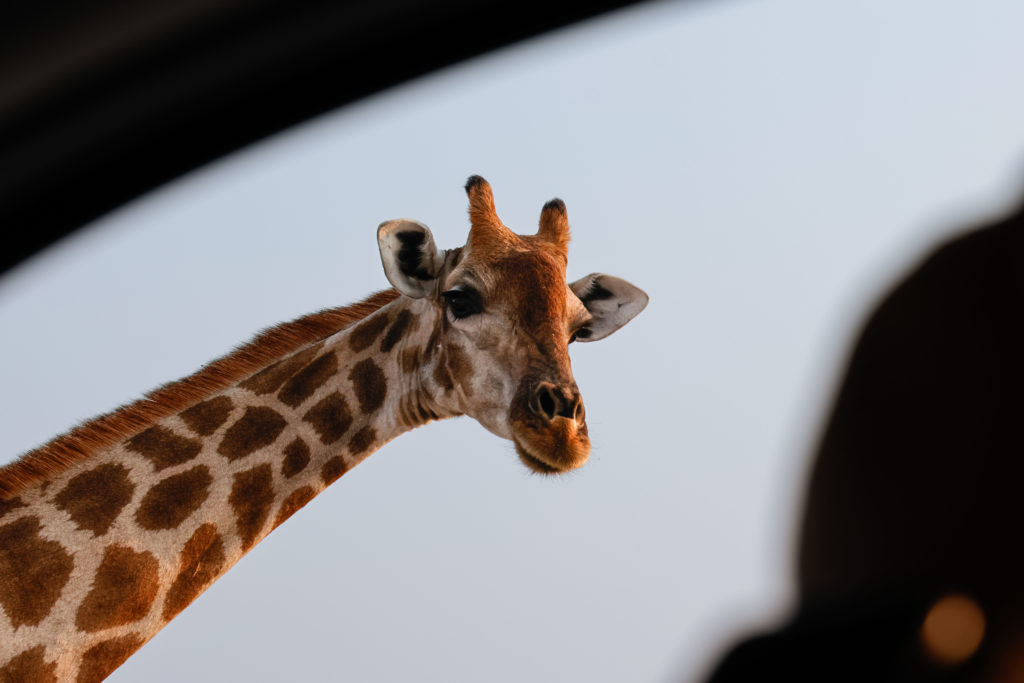
Woodrow is a compelling protagonist, but he is best when there is another character for him to bounce off. His bond with Red, the perceptive young photographer he meets along the way, is handled gently. It is shown as restrained and quietly bittersweet, carrying the weight of what could have been without tipping into the overly sentimental. His relationship with the gruff but ultimately compassionate Mr Jones moves from tense friction to something warm and almost paternal. And his connection with Wild Girl and Wild Boy is the novel’s beating heart. He starts by being fascinated, the novel ends with a deep love and appreciation.
I also valued the wider historical context which was also well handled. Racism, cruelty, and the moral compromises of the era are present and honestly drawn, but Rutledge neither lectures nor simplifies. Woodrow’s perspective evolves and the reader is left to decide what they think and feel.
There is a framing device, Woodrow at 105, finally choosing to tell this story, which added a layer of reflection. It was a clever way to ask questions about memory, legacy, and what it means to carry something untold for a lifetime. The sadness of the untold story, the life not lived and what’s hinted about the world Woodrow now inhabits felt quietly poigniant.
There is, inevitably, a risk in how much the novel attempts to cover. Animal ethics, race, belonging, memory, love, and personal growth…as a list it could sound overfull. In practice, it rarely does. The clarity of the journey and the steadiness of Woodrow’s voice keep everything anchored.
All of this sounds great but there was something extra that lifted this novel. I think it was the tone of the writing. West with Giraffes is warm without being saccharine, nostalgic without being sentimental, and genuinely joyful in a way that lifted me. That balance is harder to achieve than it looks, and Rutledge manages it with a remarkably light touch.
I recommended it to the next person I spoke to and will keep doing so.