I really enjoyed both the Lisbon setting and the rich, if painful, historical detail. However I struggled with the mystery element of the novel alongside a large, and often, unlikable cast of characters.
Plot in a Nutshell
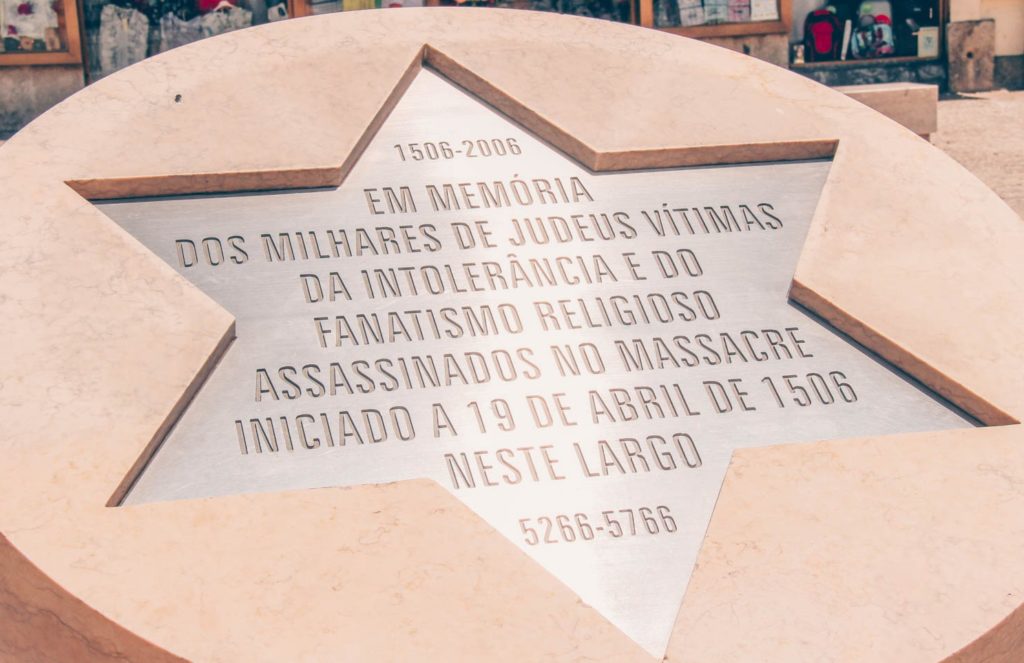
In the late 1400s all Portuguese Jews were forced to convert and became “New Christians” although many continued to practice in secret and at great personal risk. In the Spring 1506 as the shadow of the Inquisition started to darken Lisbon. At the same time a drought was further exacerbated by a plague and a large scale pogrom began. Against this backdrop Abraham, a Kabbalist is killed in an apparently locked room. The novel follows his grief stricken nephew Berekiah Zarco who seeks his uncle’s killer whilst trying to survive the devastation.
Thoughts
Zimler had clearly invested a good deal of time and effort in his research. The geographical detail was particuarly compelling. Descriptions are rich and immersive without ever seeming to be clunky or forced, it felt like I was running through the streets of Lisbon with Zarco. The historical detail too was impressive and I finished the novel feeling much more aware of a period of history I had not known a great deal about. This sense of time and place built throughout the novel. I never had the sense of being told or lectured but, rather, the facts built up gradually until layered and nuanced.
The writing of some of the scenes were deeply dark and visceral and Zimler’s prose impacted all of my senses. It may have felt uncomfortable to read at times, but he absolutely captured the brutality and horror of the time. Here though my enjoyment of the novel stopped.
The novel purports to be a direct translation from a contemporary manuscript, however the tone, structure and language (particularly some of the highly sexual content) did not match. This pulled away from the story itself. It seems like an unnecessary layer to have added.
More significantly, the characterisation makes it hard to fully invest. This is, understandably, a story of a community, and so the cast is large. But I often struggled to keep track of who was who, and more importantly getting to know them well enough to truly care about them as individuals. As the violence escalates and suffering becomes widespread, the emotional impact is blunted by that lack of connection.
Even within the central figures, there is a certain distance. Abraham, whose murder drives the mystery, comes across as cold and patronising. As a result, his death, didn’t quite hit as perhaps anticipated. The investigation that follows never quite gathers momentum, in part because it is so grounded in a sense of loss and one I struggled to connect with.
This creates an interesting imbalance. The novel is at its most compelling when it is not functioning as a mystery at all, but as a rich historical story, one of fear, secrecy, and community fear. The trade-off seems to be between narrative momentum and historical depth, and Zimler clearly prioritises the latter. Whether that works will depend on what a reader is looking for.
A richly researched and vividly realised portrait of a forgotten, yet brutal moment in history, but one that never fully connects.