
This is not a fast paced novel by any stretch of the imagination. It is however one filled with rich characters and strong sense of place. Together these components made for an evocative and moving story of both war and the pain of making the peace that stayed with me after completing the book.
Plot in a Nutshell
The story opens in 1920 and follows Lieutenant Alexander Lucas, Captain James Reid. THese men and those they command have the unenviable task of locating and identifying British war dead. Their work will eventually form one of the many formal war grave sites that now mark the landscape.
The narrative gathers around several key arrivals in Morlancourt. A young woman searching for her fiancé’s grave, and an experienced nursing sister overseeing the burial of twenty-four nurses killed during the war. Alongside these encounters, Reid and Lucas are pressured to overlook what appears to be a war crime site and must also confront the burial of a soldier executed for cowardice. The culmination of the story is a ceremony put together for dignitaries and journalists which offers a sharp comparison with the reality of the work being undertaken.
Thoughts
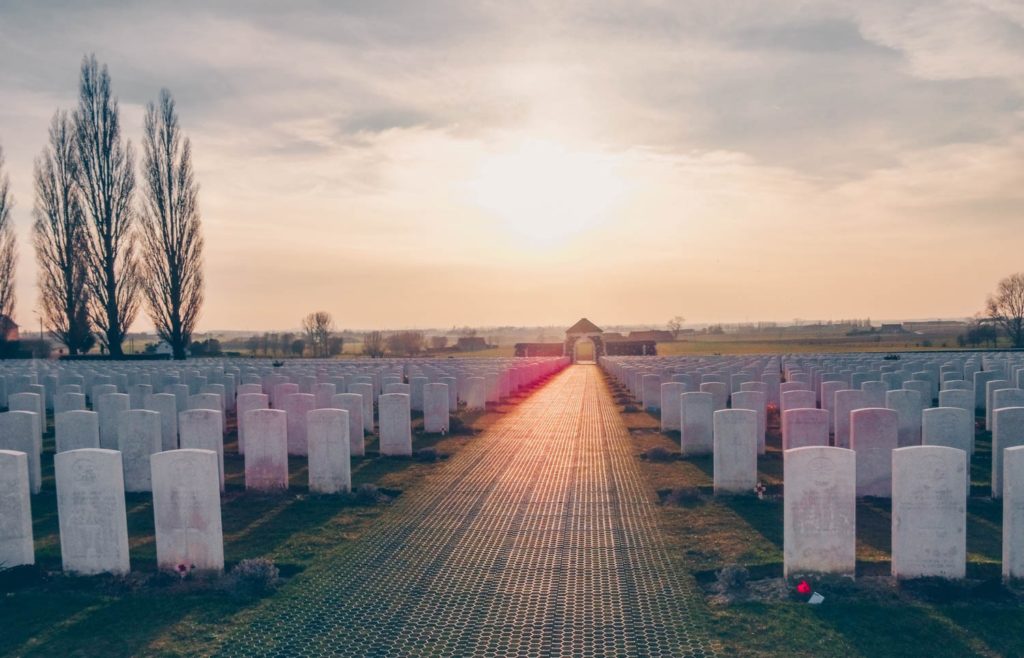
I have been to France and also Belgium to visit a number of the war graves and memorials (French, UK and Commonwealth as well as German) scattered across the landscape and on each visit have found myself very moved. I had never however given a great deal of thought to how they were created and the effort involved. Nor had it occurred to me that like Reid, Lucas and Drake much of this effort would have been undertaken by soldiers not demobbed at the end of the War and as such living in a sort of limbo continuing in France. Edric captures this sense of limbo incredibly well – perhaps because the novel is not fast paced or full of complex plot and story lines but rather focuses predominantly on the ordinary routine of the men with only small every day interruptions.
Both Reid and Lucas are well drawn and realistic characters. Both have fought during the War before their current postings although it is clear both have been impacted in very different ways. I however particularly enjoyed the interactions between both men and a cast of secondary characters. I found many of Reid and Beniot scenes, the French station master struggling to come to terms with the death of his son and the changes to his village, particularly moving.
There is something slightly stereotypical in how the novel characterises Wheeler, Reid and Lucas’ commanding officer. It presents him as disconnected from the work his men undertake, and as heavily political and bureaucratic. Guthrie, the army chaplain who appears midway through the story, comes from a similar mould. That said, the novel uses both men to good effect, creating and reinforcing the sense that, for our main characters, the war has not yet truly ended.
Anything but stereotypical is the inclusion of Caroline Mortimer, the nursing sister who enters the story awaiting the arrival of the bodies of a number of female nursing casualties. I did not see Caroline as a love interest at all. Instead, she feels like another clever and well-researched way to highlight the war’s impact across society. The novel thus shows how women suffered. Not only waiting and mourning their losses at home, but also the consequences of their more active involvement in theatres of war.
A sombre, quietly powerful meditation on what it means to make peace with both the past and the dead and how long that work can really take.